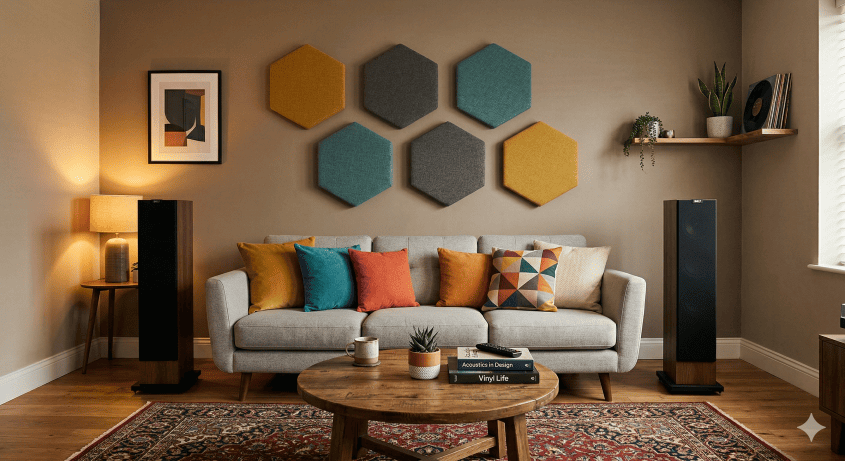
Soundproofing vs Acoustic Treatment: What Your Home Theatre Really Needs
If you’re planning a home theatre, you’ve probably heard terms like soundproofing and acoustic treatment. And most people assume they mean the same thing. They don’t. In fact, confusing these two is one of the biggest mistakes homeowners make. You spend lakhs on speakers and still feel something is off. Either the sound leaks outside the room, or the audio inside doesn’t feel clear. This guide will help you understand the real difference between soundproofing vs acoustic treatment, and what your home theatre actually needs.
Why This Confusion Happens So Often
It usually starts the same way. You tell someone you want a home theatre. They say, “We’ll do soundproofing.” Sounds good. Feels technical. Must be right.
But here’s the problem.
Soundproofing and acoustic treatment solve completely different problems.
- Soundproofing keeps sound inside the room.
- Acoustic treatment improves how sound behaves inside the room.
You can have one without the other. And choosing the wrong one leads to disappointment.
What is Soundproofing?
Soundproofing is about isolation. It prevents sound from entering or leaving a room.
Think of it like trying to stop water from leaking through a wall. You need mass, sealing and proper construction.
How Soundproofing Works
- Adding dense materials like concrete or multiple drywall layers
- Sealing gaps around doors, windows and electrical points
- Using double walls or floating structures
The goal is simple. Stop sound transmission.
The Reality in Indian Homes
True soundproofing is expensive and difficult in most apartments. You need structural changes. False ceilings alone do not soundproof a room.
This is where many homeowners get misled.
They invest in basic materials expecting sound isolation, but still hear bass leaking into adjacent rooms.
What is Acoustic Treatment?
Acoustic treatment is about improving sound quality inside your room. It controls reflections, echoes and bass build-up.
Imagine clapping inside an empty room. You hear echo and harsh reflections. Now add curtains, carpets and furniture. The sound feels more controlled.
That’s basic acoustic treatment.
Key Elements of Home Theatre Acoustics
- Absorption: Panels that reduce reflections
- Diffusion: Surfaces that scatter sound evenly
- Bass Traps: Control low-frequency build-up
These elements work together to create a balanced listening experience.
Soundproofing vs Acoustic Treatment: Side-by-Side Comparison
| Factor | Soundproofing | Acoustic Treatment |
|---|---|---|
| Purpose | Stop sound leakage | Improve sound quality |
| Focus | Outside noise control | Inside audio clarity |
| Cost | High | Moderate |
| Complexity | Structural changes required | Surface-level treatment |
| Typical Use | Studios, cinemas | Home theatres, media rooms |
What Your Home Theatre Actually Needs
Here’s the honest answer.
Most Indian home theatres need acoustic treatment far more than soundproofing.
Why?
- Your biggest problem is usually poor sound clarity, not leakage
- Bass becomes muddy without treatment
- Dialogue feels unclear due to reflections
Even a high-end speaker system will sound average in a poorly treated room.
When Do You Actually Need Soundproofing?
Soundproofing makes sense in specific situations:
- Independent villas with dedicated theatre rooms
- High-volume listening without disturbing others
- Professional studios or serious audiophile setups
Even then, complete soundproofing is rarely achieved. It is about reducing sound transmission, not eliminating it entirely.
Common Mistakes in AV Acoustics Basics
- Assuming false ceiling equals soundproofing
- Ignoring wall reflections
- Skipping bass treatment
- Overusing soft materials without proper planning
- Not considering speaker placement along with treatment
Home theatre acoustics is a system. Everything works together.
A Practical Room Treatment Guide (What You Can Actually Do)
Let’s make this simple.
You don’t need a recording studio setup to improve your home theatre acoustics. Even small, practical changes can make a huge difference.
Think of this as a step-by-step approach you can actually implement in your home.
Step 1: Start with First Reflection Points (Biggest Impact)
When sound leaves your speakers, it doesn’t just come directly to your ears. It also reflects off walls and reaches you slightly delayed. This causes muddiness and reduces clarity.
The goal is to absorb these early reflections.
What to do:
- Place acoustic panels on side walls at ear level
- Focus on the area beside your seating position
- Also consider panels on the ceiling above the seating area
What to buy:
- Acoustic foam panels (12×12 inch or 24×24 inch tiles)
- Fabric-wrapped acoustic panels (better look for living rooms)
Search terms on Amazon: “acoustic foam panels”, “sound absorption panels for wall”
This alone can make dialogue clearer almost instantly.
Step 2: Control Bass with Corner Traps
Bass is the hardest part of home theatre acoustics. Low frequencies build up in corners, making the sound feel boomy or uneven.
If your bass feels too heavy or inconsistent, this is usually the reason.
What to do:
- Place bass traps in room corners
- Start with front corners (behind speakers)
- Add rear corners if needed
What to buy:
- Foam bass traps (triangular corner pieces)
- High-density fiber bass traps (better performance)
Search terms: “bass trap corner foam”, “acoustic corner bass trap”
This step tightens bass and makes it feel more controlled instead of overwhelming.
Step 3: Use Rugs and Curtains (Simple but Effective)
This is the easiest upgrade and often overlooked.
Hard surfaces like marble flooring and bare walls reflect sound heavily. Soft materials absorb it.
What to do:
- Add a thick rug or carpet between speakers and seating
- Use heavy curtains instead of sheer ones
- Cover large reflective surfaces where possible
You don’t need specialised products here. Regular home furnishings work well.
This reduces echo and makes the room feel more comfortable instantly.
Step 4: Rear Wall Treatment (Avoid Sound Bounce Back)
Sound that hits the back wall and reflects directly to your ears can create a confusing soundstage.
What to do:
- Add absorption panels on the rear wall
- Or use bookshelves or textured surfaces for diffusion
What to buy:
- Acoustic panels
- Wooden diffusers (if you want a premium look)
Search terms: “acoustic diffuser panel”, “wood sound diffuser”
This improves depth and makes surround sound feel more immersive.
Step 5: Don’t Overdo It
This is where many people go wrong.
Too much absorption makes the room feel “dead”. Sound loses energy and feels unnatural.
Keep a balance:
- Mix absorption and reflection
- Don’t cover every wall with foam
- Start small and add gradually
Step 6: Combine with Good Speaker Placement
Even the best acoustic panels won’t fix poor speaker placement.
Before buying anything, ensure:
- Front speakers are at ear level
- Center speaker aligns with screen
- Surround speakers are slightly behind seating
Acoustics and placement always work together.
What This Looks Like in a Real Home
You don’t need a dedicated theatre room to get this right.
A well-treated living room setup might look like:
- 2 to 4 acoustic panels on side walls
- 1 rug in front of seating
- Curtains on windows
- 2 bass traps in front corners
That’s it.
No complicated construction. No heavy renovation.
But the difference in sound quality is very noticeable.
How This Feels in Real Life
Once a room is properly treated, the difference is immediate.
Dialogue becomes clearer. Bass feels tighter. Sound doesn’t feel harsh.
It feels like the system suddenly became more expensive.
But nothing changed except the room.
Final Thoughts
Soundproofing vs acoustic treatment is not a choice between two similar things. It is about solving two completely different problems.
For most homes, focusing on acoustic treatment delivers the biggest improvement in experience.
At ThingIQ, we design home theatres with the right balance of acoustics, speaker placement and system integration. If you’re planning a home theatre, you can connect with our team here for expert guidance.
FAQ
Is soundproofing necessary for home theatres?
Not always. Most homes benefit more from acoustic treatment.
Can acoustic panels soundproof a room?
No. They improve sound quality but do not stop sound leakage.
What is the biggest issue in home theatre acoustics?
Reflections and poor bass control.
Are bass traps really necessary?
Yes. They help control low-frequency build-up which affects clarity.
Can I do acoustic treatment in an existing room?
Yes. Most treatments can be added without structural changes.
Is soundproofing possible in apartments?
Partial sound reduction is possible, but complete soundproofing is difficult.
Sources
- Dolby Home Theatre Design Guidelines View Source
- Acoustic Basics – AVS Forum View Source
- RTINGS Audio Testing Methodology View Source
- Crutchfield Acoustic Treatment Guide View Source
- Soundproofing Company Technical Resources View Source