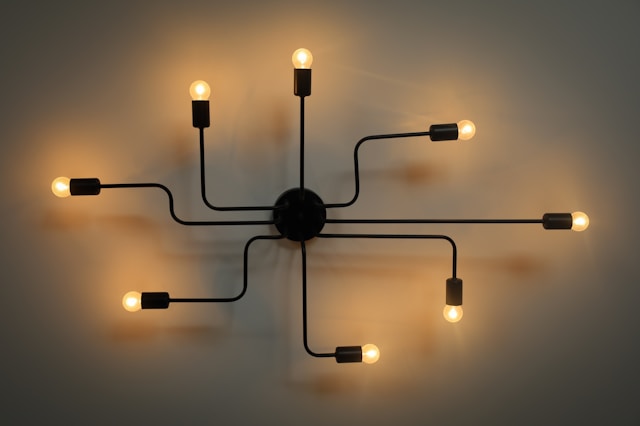
Lighting influences comfort, mood and the personality of every room. The right dimming system helps create ambience, reduce glare, save energy and make modern LED lights perform better. But with several dimming technologies available, choosing the right one for an Indian home can be confusing. This guide simplifies each method, explains where it fits and helps you make confident decisions.
Why dimming matters
Dimming is more than brightness control. It changes the behaviour of LEDs, affects colour warmth, reduces eye strain and shapes the emotional feel of a space. A well planned dimming strategy gives you flexibility for reading, relaxing, entertaining or creating a cosy evening mood. Choosing the right dimming technology is the key to stable, flicker free performance.
The major dimming technologies you should know
1. TRIAC Leading Edge and Trailing Edge (Phase Cut) Dimming
TRIAC dimming is the most widely known household dimming technology. It controls light by cutting part of the AC waveform. There are two styles: leading edge and trailing edge. Although they operate slightly differently, they serve a similar purpose, so it is practical to treat them together when choosing a dimming method.
- Leading edge (traditional TRIAC): Often found in older dimmers, works well with incandescent and some LED drivers.
- Trailing edge (also TRIAC based): Smoother and quieter for modern LED fixtures, generally more stable at low brightness levels.
Pros: Affordable, commonly available, simple installation.
Cons: Flicker and buzzing are common if the LED driver is not designed for TRIAC. Performance varies heavily by fixture brand.
Best for: Retrofits or budget projects where compatible LED drivers are confirmed.
2. 0–10V Analogue Dimming
0–10V dimming uses a separate low voltage control circuit to adjust brightness. A signal ranging from zero volts to ten volts determines the output intensity. It is known for predictable dimming curves and smooth fades.
- Pros: Very smooth, ideal for large rooms, home theatres and settings requiring uniform dimming.
- Cons: Requires extra wiring; not plug and play in older homes.
- Best for: Renovations or new build projects where performance is more important than simplicity.
3. DALI and DALI-2 Digital Dimming
DALI is a digital lighting control standard used in many premium residential and commercial projects. Instead of simply dimming, DALI enables grouping, individual fixture control, scene creation and two way feedback from each driver.
- Pros: Highly reliable, scalable, flexible, and automation friendly. Perfect for future ready homes.
- Cons: Higher cost; requires planned wiring.
- Best for: New construction, villas, premium apartments and full home automation projects.
4. DMX512 Architectural and Entertainment Dimming
DMX512 is a digital control system originally designed for stage and entertainment lighting. It has now become common in high end residential spaces, especially where dynamic lighting, colour control or light choreography is desired.
- Pros: Very fast, accurate control across many fixtures; ideal for RGBW lighting, cove lighting and large architectural features.
- Cons: Requires specialised drivers and professional setup; more complex than other systems.
- Best for: Home theatres, mood lighting, RGBW coves, accent lighting and high end architectural spaces.
Quick comparison table
| Dimming Method | Best Use Case | Pros | Cons |
|---|---|---|---|
| TRIAC (leading + trailing) | Retrofit and older wiring | Affordable, widely available | Flicker risk with LEDs; driver dependent |
| 0–10V | Theatres, large rooms | Smooth dimming | Needs extra wiring |
| DALI / DALI-2 | New builds, premium homes | Advanced control and diagnostics | Higher initial planning cost |
| DMX512 | Architectural, RGBW, theatres | Fast, precise, supports dynamic effects | Complex setup, specialised drivers |
How to choose the right dimming method
1. Check the LED driver compatibility
The driver determines which dimming method works. Always check markings such as TRIAC dimmable, 0–10V dimmable, DALI driver or DMX capable. Never assume an LED will dim smoothly unless the driver explicitly supports the method.
2. Evaluate your wiring stage
- Existing home: TRIAC trailing edge dimmers, provided fixtures are compatible.
- Renovation: 0–10V or hybrid DALI in key rooms.
- New construction: DALI and DMX512 offer the most control and long term stability.
3. Match dimming style to the room
- Bedrooms: Soft warm dim via TRIAC trailing edge or 0–10V.
- Living rooms: DALI for smooth scenes.
- Home theatres: 0–10V or DMX for fade accuracy.
- Accent lighting: DMX512 for RGBW and curves.
4. Avoid common mistakes
- Mixing incompatible dimmers and LED drivers.
- Using generic drivers that do not publish dimming curves.
- Installing TRIAC dimmers on LED fixtures that only work with trailing edge.
- Ignoring minimum load requirements.
Best practices for Indian homes
- Voltage fluctuations can damage drivers. Use surge protection.
- Buy fixtures with branded drivers and clear dimming specifications.
- Document each room’s dimming method for future upgrades.
- For premium homes, plan wiring early to support DALI or DMX512 without rework.
FAQ
Why do LEDs flicker when dimmed?
It usually means the LED driver and dimming method are not compatible. Always match the driver to the dimmer type.
Is DALI too advanced for a home?
No. DALI is becoming common in premium apartments and villas because of its stability and future readiness.
Where does DMX512 make sense in a house?
DMX is perfect for RGBW coves, mood lighting, home theatres and large architectural lighting scenes.
Can TRIAC dimming work with all LEDs?
No. Only LEDs with TRIAC compatible drivers will dim smoothly.
Do I need rewiring for 0–10V dimming?
Yes. 0–10V requires separate control wiring.
Sources
- Philips LED driver compatibility guide. View Source
- DALI Alliance technical documentation. View Source
- DMX512 protocol documentation — PLASA. View Source
- IES Lighting Handbook — dimming fundamentals. View Source