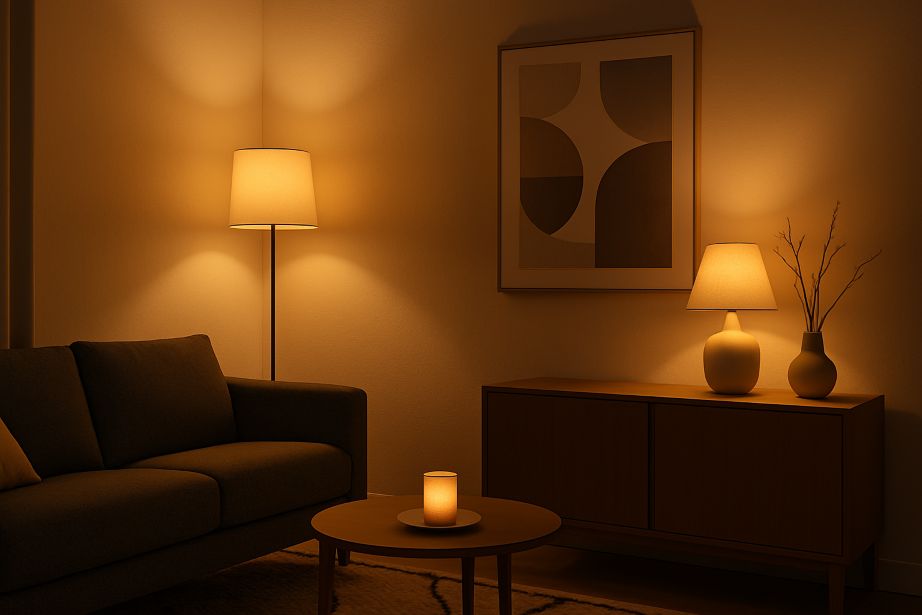
Light is not just something that helps you see. It is information for your body. The colour, brightness and temperature of light affect sleep, focus, mood and even long term health. Human Centric Lighting, or HCL, brings those scientific insights into everyday spaces so lighting supports how people live, work and rest. This article explains how HCL works, what benefits you can expect, and how to bring it into Indian homes and workplaces.
What is Human Centric Lighting?
Human Centric Lighting is a design approach that matches artificial light to human biological rhythms and activities. Instead of a one-size-fits-all bulb, HCL systems tune brightness and color temperature throughout the day. Cooler, bluish light helps with alertness and concentration in the morning. Warmer, amber tones in the evening help the body prepare for sleep. Over time, this creates a lighting environment that feels natural and healthy.
The science behind the light
Our bodies follow circadian rhythms that respond strongly to light. Special cells in the eye react to blue-rich light much more than to other wavelengths. When used thoughtfully, this can help train daily rhythms. Research shows HCL can improve sleep, mood and productivity in work settings. For example, industrial studies found productivity gains and fewer accidents when workers were exposed to tuned, high quality lighting during the day. The idea is simple. Let light support what you want your body to do.
Benefits you can expect
HCL is not only for laboratories or high end offices. The benefits are practical and measurable.
- Better sleep and daytime alertness. The right daytime light improves alertness. Warmer evening light helps the body wind down so sleep comes more easily.
- Improved mood and wellbeing. Proper light quality helps reduce stress and supports emotional balance.
- Higher productivity and fewer errors. Tuned lighting in workplaces helps people focus and reduces mistakes in repetitive tasks.
- Energy aware lighting. When paired with sensors and schedules, HCL uses energy responsibly by dimming or changing color based on presence and daylight.
- Adaptability for different users. Lighting can be personalized for different rooms, ages and tasks.
How HCL works in practice
Most HCL solutions combine three elements: tunable luminaires, sensors, and a control platform. Tunable luminaires change their color temperature and brightness. Sensors measure presence and ambient light so the system reacts only when needed. A controller coordinates schedules and scenes so lighting transitions feel natural. Modern systems also support app control and integration with home automation platforms so you can add HCL to an existing smart home.
Bringing HCL into Indian homes and offices
India has unique lighting needs. Hot climates, long daylight hours in some regions and dense urban apartments shape how we use artificial lighting. HCL offers practical advantages in Indian context. For example, automated shading combined with tuned lighting can reduce cooling loads during hot afternoons. In compact apartments, human centric lighting helps compensate for limited daylight access. In offices, HCL supports shift workers and improves comfort during long summer months.
Costs have come down for LEDs and controllers, making HCL more accessible. A hybrid approach is often best in India. Start with a visible living space or a home office, add tunable downlights or smart fixtures, and expand later. This phased approach controls cost while delivering clear benefits early.
Use cases that make sense right now
Here are simple, high impact HCL projects that work for most homes and businesses:
- Wake up gradually. Program bedroom lights to warm up and brighten slowly to support a gentle wake up routine.
- Home study and work zones. Use cooler light during focused work hours and warmer light for reading or relaxation.
- Living and dining scenes. Create evening scenes with warm, dim light that promote conversation and relaxation.
- Care and senior living. Tune lighting to reduce falls and improve orientation for older residents.
- Retail and hospitality. Use HCL to improve customer mood and highlight products accurately.
Design tips that actually work
Good HCL design is subtle. Keep these practical pointers in mind:
- Plan lighting layers. Combine ambient, task and accent lighting to create depth and flexibility.
- Use tunable downlights and warm accent lights rather than relying on a single source.
- Leverage daylight where possible. Mix natural and artificial light intelligently with sensors.
- Think in scenes. Build a few key scenes like Morning, Work, Relax and Night that switch multiple fixtures at once.
- Test in place. Try settings for a week to understand what works for your family.
Costs and return on investment
Switching to HCL can involve higher fixture costs and a control system. However the return shines in several ways. Improved productivity, better sleep and reduced energy use from intelligent controls can offset upfront investment. For commercial spaces, improved worker performance and fewer sick days contribute to a clear business case. For homes, the value is more qualitative but real. Better sleep, reduced stress and a home that feels comfortable are benefits people notice immediately.
Choosing the right products
Not all tunable LEDs are equal. Look for fixtures with good color rendering (CRI 90 or higher when possible) and stable color temperature across dimming ranges. Certified drivers and reliable controls make a difference. Compatible sensors and a stable control platform ensure the system behaves predictably. When in doubt, consult a lighting specialist or integrator who understands HCL design and Indian conditions.
How ThingIQ can help
ThingIQ designs end-to-end HCL solutions as part of broader home automation projects. We assess spaces, recommend products, and design control strategies that meet daily needs. ThingIQ also integrates HCL with HVAC and shading to amplify comfort and savings. If you want a practical plan to try HCL in your home, a pilot room approach is usually the best first step. Contact us for a consultation on HCL.
FAQ
Is Human Centric Lighting the same as smart lighting?
Not exactly. HCL focuses on matching light to human biology and activities. Smart lighting can include HCL but also covers convenience features like remote control and scheduling.
Will HCL improve my sleep?
Yes. Reducing blue light exposure in the evening and using warmer tones helps the body prepare for sleep. HCL supports healthier night time routines.
Can HCL save energy?
It can. When paired with sensors and daylight harvesting, HCL uses energy only when needed and optimizes light levels rather than keeping everything at full power.
Is HCL suitable for small apartments?
Absolutely. Tunable fixtures and well planned scenes help small spaces feel larger and more comfortable.
Do I need professional help to install HCL?
For best results, consult a lighting designer or integrator. DIY options exist but professional design ensures the system supports health and performance goals.
Are HCL systems compatible with home automation platforms?
Most modern HCL controllers integrate with popular home automation platforms. Choose products that support open protocols for better long term compatibility.
How soon will I notice benefits?
Some benefits, like improved mood and better evening wind down, can be noticed in days. Sleep improvements may take a few weeks as your circadian rhythm adjusts.
Are HCL fixtures expensive?
Prices have decreased significantly for tunable LEDs. The incremental cost is often reasonable compared to the lifestyle benefits they offer.
Sources
- Human Centric Lighting research and industry guidance. View Source
- LEDs Magazine HCL study on productivity and health. View Source
- Smart lighting and circadian health overview. View Source
- Practical HCL design for buildings. View Source
- Energy and lighting efficiency analysis. View Source