Home Theatre Setup Guide: Room Size, Speaker Placement and Budget Planning
Building a personal cinema at home is incredibly exciting, but it also brings a long list of questions. How big should your room be? Where exactly do the speakers go? And most importantly, how much will it cost? For homeowners dreaming of that theatre experience, getting the planning right is crucial. This guide walks you through everything: from ideal room dimensions and speaker placement tips, to realistic budget planning for a home theatre setup.
Room Size and Layout
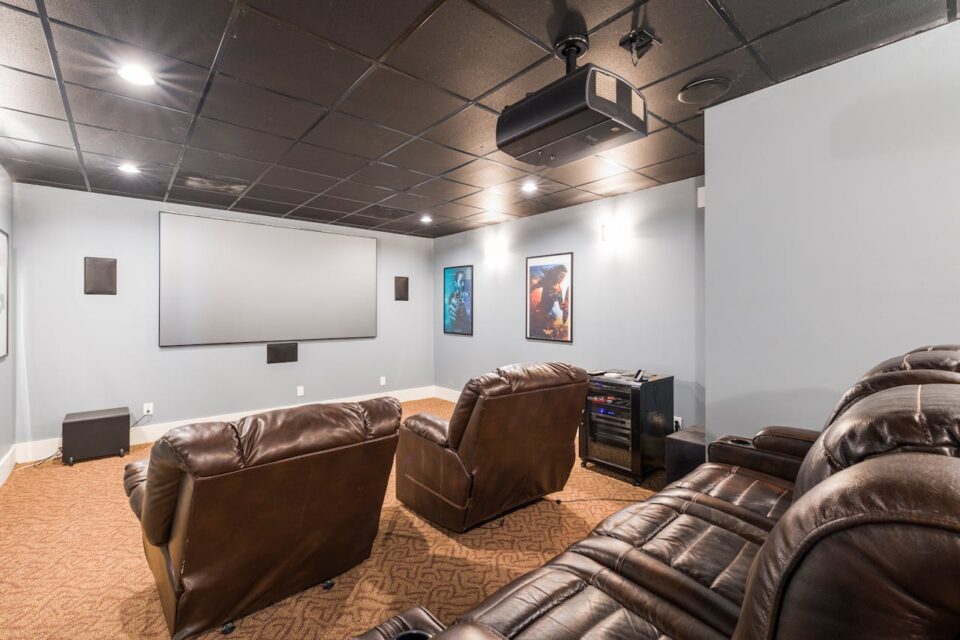
Your room’s dimensions set the foundation for the entire setup. Too small, and sound reflections and cramped seating ruin the experience. Experts recommend a minimum dedicated theatre size of about 12 ft x 10 ft with 8 ft ceilings. This can fit a large screen and a 5.1/7.1 surround system comfortably. Anything significantly smaller will feel tight and distort sound. For more immersive setups, consider bigger rooms:
| Setup Type | Room Dimensions | Notes |
|---|---|---|
| Compact (Basic 5.1) | 12 x 10 ft (~120 sq.ft.) | Single-row seating, projector or large TV |
| Medium (7.1 with 2 rows) | 15 x 20 ft (~300 sq.ft.) | Two rows of seats, larger screen, Atmos-ready |
| Large (Dolby Atmos, tiered) | 20 x 25+ ft (500+ sq.ft.) | Tiered seating, full Dolby Atmos overhead speakers |
If using a shared living or drawing room instead, you’ll need more space. As a rule of thumb, aim for at least 15 x 12 ft to house a compact 5.1 system or soundbar setup comfortably. In short, design the room first, then select your gear. Planning the space ahead ensures proper screen size, speaker spacing and seating comfort.
Speaker Placement Guide
With the room sorted, the next step is positioning the speakers. Proper placement makes or breaks the soundstage. Here are the basics:
- Front Left/Right speakers: These form the sound foundation. Place them wide apart, ideally as far from each other as they are from your listening seat. Angle (“toe-in”) them slightly toward the main seat. Your ears should be roughly at the level of the tweeters.
- Center channel: This handles dialogue. Position it directly above or below your screen, aligned with its center. Tilt it so its tweeter aims at the listening position. If it sits in a cabinet or shelf, ensure the voice is not blocked.
- Surround speakers: For a 5.1 setup, put the surround pair to your left and right (or slightly behind) at or just above ear height. In a 7.1 system, add the two rears behind your seats, angled inward. Aim all surround speakers toward the listeners. Good immersion comes from having these side speakers slightly above or level with ear height and spaced evenly.
- Subwoofer(s): Bass is non-directional, so placement is flexible. A single sub can be near a wall for strong output, or in a corner for extra punch. The key is experimentation. Move it to different spots and listen for tight, even bass. Larger rooms often benefit from two subs in opposite corners to smooth out low frequencies.
Room Acoustics and Seating
Even the best speakers can sound bad in the wrong room. Treat hard surfaces and corners to avoid echoes and boomy bass. In very small rooms (less than 120 sq.ft.), sound waves overlap excessively, causing “muddy” sound and bass peaks. Adding acoustic panels, bass traps and heavy curtains can tame these reflections and improve clarity. The bigger the room, the more balanced the sound will be.
Also plan your seating layout carefully. Place your main listening chair roughly at the optimal viewing distance: about 1.2x the screen diagonal. For example, a 100-120″ screen should be viewed from around 12-15 ft away. If you have multiple rows, consider risers so rear viewers can see over those in front. Avoid placing seats too close to walls or corners to reduce early reflections.
Budget Planning and Key Components
Home theatre costs range widely depending on your goals. A simple 5.1 system (AV Receiver + 5 speakers + sub) with a TV might start around a couple of lakhs. A full projector-based Dolby Atmos setup can easily run into multiple lakhs. For context, a basic Dolby Atmos or 5.1.2 system in India can cost as low as ₹1.5 lakh. Complete premium setups (for example, with acoustic treatment and calibration) often fall under the ₹20 lakh range for high-end installations.
- Display: Large TVs (75-85″) typically cost ₹1-3 lakh. Projectors range from under ₹1 lakh (Full HD lamps) to several lakhs for 4K laser models. Use a throw-distance calculator to pick a screen size that fits your room.
- AV Receiver/Processor: Budget 5.1 AV receivers start around ₹50k. For Dolby Atmos (e.g. 7.1.2), a 7-channel AVR typically costs ₹70k-1.5L. High-end 9 or 11 channel units range from ₹1.6L to ₹4L+.
- Speakers: Options range from modest bookshelf speakers (approx. ₹20k/pair) to premium towers (₹3L+ each). A complete 5.1 speaker package (fronts, center, surrounds, sub) for a mid-range brand might start around ₹1-2 lakh. Subwoofers alone range roughly ₹20k-1L each.
- Acoustics & Accessories: Budget for acoustic panels, cables, and seating. Panels can be ₹2-5k each. Don’t skimp on quality speaker cables and HDMI. Comfortable seating (recliners or risers) and professional installation can add to cost but greatly improve the experience.
It’s wise to get expert advice. Many installers, like ThingIQ offer consultation so you don’t overspend on mismatched gear. Even within a set budget, prioritize the right screen size and quality speakers above bells and whistles. You can connect with us for a free home theatre design consultation.
FAQ
What is the minimum room size for a home theatre?
For a proper home theatre, aim for at least 12×10 ft with 8 ft ceilings. This allows for a 100″+ screen and a 5.1 surround system comfortably. Smaller rooms tend to sound boomy and cramped.
How should I place my home theatre speakers?
Front left/right speakers should be as wide apart as possible and angled toward you. The center speaker goes under or over the screen, pointing at the listeners. Side surrounds go to your sides (or just behind) at or slightly above ear level, and in 7.1 setups, add rear speakers behind your seating. Subs are flexible: try corners or along walls and listen for the best bass.
Can I use my living room instead of a dedicated theatre room?
Yes, many do. But ensure the living room is large enough (around 15×12 ft or more) to fit even a compact 5.1 system. A living room setup is often not a true cinema experience but it can work well with a good soundbar or 5.1 system.
Do I really need acoustic panels?
In most home theatres, yes. Hard walls cause echoes and muddled sound. Panels and bass traps absorb unwanted reflections, making dialogue clearer and bass tighter. This is especially important in smaller or rectangular rooms.
How much should I budget for a home theatre?
It depends on your goals. A basic setup (TV + AVR + 5.1 speakers) might cost ₹2-4 lakh. A projector-based Dolby Atmos installation often starts around ₹5 lakh and goes up. As a benchmark, many premium home theatres in India are built for ₹10-20 lakh without breaking the bank.
What’s better: a projector or a large TV?
Projectors can deliver much larger screens (100″+) for the money and provide a true cinematic feel in a dark room. Large LED TVs are brighter and simpler (no need for a screen or dark room). For dedicated dark rooms, projectors are popular; for multipurpose living rooms, a TV may be more convenient.
Sources
- Times Audio – Home Theater Minimum Room Size. View Source
- Crutchfield – Speaker placement for home theatre. View Source
- Audio Advice – Home Theater Speaker Layout & Dolby Atmos. View Source